
Editor’s note:
This is a new series about the Christian and his emotions, based on a booklet published by Pilgrim Ministries.
In each issue, we will examine a set of human emotions and draw Biblical conclusions for the right response.
This first article is an introduction to understanding our emotions.
Introduction
This is a study of human emotions from a Biblical perspective. We know the world that denies God has many philosophies about emotions and theories on how to treat them. It is our desire to know what God has revealed through His Word, so we relate to our emotions as God intends.
The first fact we’d like to point out is that thoughts, attitudes, and emotions may be hidden inside of us, but they show up in our words and actions and on our countenance. As much as we may try, we really cannot keep our inner activity hidden.
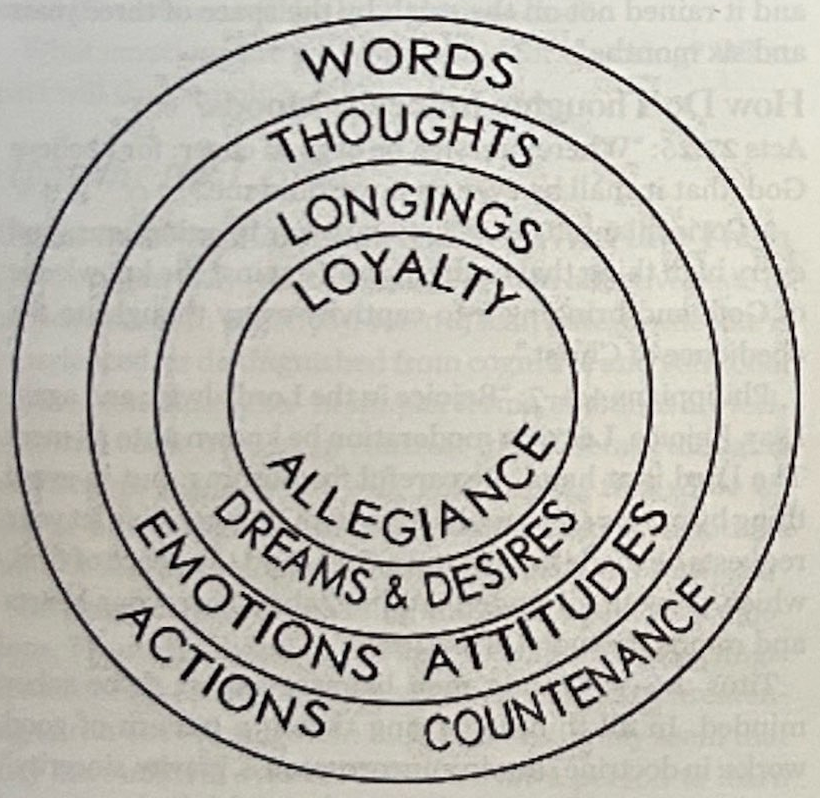
The next fact is that our emotions, attitudes, and thoughts are spawned by our private dreams, desires, and longings, which in turn spawned by our loyalty and allegiance.
So, where does our loyalty and allegiance come from? Finally, that comes from our will. Either our will is set for the advancement of self, or else we have taken our will to the foot of Jesus’ cross to be an expression of His grace in our present world. This thought will continue to surface throughout this study. To whom is my will aligned? Who is my deepest loyalty connected to? And how do I get there? The answer can be found in intentional worship. Genuine worship of Almighty God is essential to cultivating healthy emotions.
Worship provides a framework for expressing gratitude, joy, and other emotions in an ever-deepening connection with God and a growing sense of purpose in life. Although we do not highlight worship as a separate emotion in this study, we recognize that it tempers all stray emotions and strengthens the positive emotions of humanity.
Taking Responsibility for Our Emotions
Lesson Aim:
To understand why we as humans have emotions and learn how our emotional health and our spiritual journey are connected.
Lesson Focus:
God’s Word is the key God has given to help man understand himself. Believers in Christ who accept the authority of God’s Word in matters such as creation, redemption, and eternity should also look to the Bible for answers regarding feelings and emotional journeys. The enemy has always had many false answers and counterfeits.
As we turn to the Word of God to understand emotions, we will not find emotions treated as a separate subject. The Bible is not written that way. Instead, it shares the unfolding story of God’s work with mankind. The subject of emotions and how God looks at them is found intertwined throughout the pages of sacred scripture. What we need to learn must be gleaned by connecting truths from a wide spectrum of Bible passages.
In this lesson, we want to consider these questions: “Why do we as humans have emotions? Are we really responsible for our feelings?” These questions lead to the broader question, “Are we responsible for our own emotional health?” And if so, “What can we do to improve our emotional health?”
We tend to think of our health as something that happens to us rather than something we choose. For example, when we catch the flu, it just happens, and we can’t really prevent it.
Is that how the Bible portrays our feelings? Are they something that happen to us regardless of our choices? Is a case of “emotional illness” something we can catch or, by good chance, happen to avoid?
To answer this question, we need to answer the more basic question, “Are emotions an expression of the body or of the soul?” If and when they come from our physical being, then, like other bodily afflictions, they may be very much outside our control and responsibility. If they come from our souls, then they will be viewed as part of the responsibility we have in caring for our souls.
In this lesson and throughout this study, we want to discover how God wants us to view our emotions. We will learn that there are thought patterns we must choose that will affect all of life. We will discover that being sober-minded will have a profound influence on our lives for eternity.
Theme Verse
“For God hath not given us the spirit of fear; but of power, and of love, and of a sound mind” (2 Timothy 1:7).
Lesson text
God and Mankind Share Similar Emotions
Deuteronomy 6:14: “Ye shall not go after other gods, of the gods of the people which are round about you; For the LORD thy God is a jealous God among you lest the anger of the LORD thy God be kindled against thee, and destroy thee from off the face of the earth. Ye shall not tempt the LORD your God.”
Psalm 7:11: “God judgeth the righteous, and God is angry with the wicked every day.”
Psalm 103:13: “Like as a father pitieth his children, so the LORD pitieth them that fear him.”
John 16:27: “For the Father himself loveth you, because ye have loved me, and have believed that I came out from God.”
Man is Created in God’s Image
Genesis 1:26: “And God said, Let us make man in our image, after our likeness: and let them have dominion … So God created man in his own image, in the image of God created he him; male and female created he them.”
Genesis 9:6: “Whoso sheddeth man’s blood, by man shall his blood be shed: for in the image of God made he man.”
Are Emotions Primarily from the Body or From the Soul?
John 4:24: “God is a Spirit: and they that worship him must worship him in spirit and in truth.”
Luke 16:25: “But Abraham said, Son, remember that thou in thy lifetime receivest thy good things, and likewise Lazarus evil things: but now he is comforted, and thou art tormented.”
Revelation 6:9–10: “And when he had opened the fifth seal, I saw under the altar the souls of them that were slain for the word of God, and for the testimony which they held: And they cried with a loud voice, saying, How long, O Lord, holy and true, dost thou not judge and avenge our blood on them that dwell on the earth?”
Do Christians Have Normal Human Emotions?
Acts 14:15: “And saying, Sirs, why do ye these things? We also are men of like passions with you, and preach unto you that ye should turn from these vanities unto the living God, which made heaven, and earth, and the sea, and all things that are therein.”
James 5:17: “Elias was a man subject to like passions as we are, and he prayed earnestly that it might not rain: and it rained not on the earth by the space of three years and six months.”
How Do Thoughts Influence Moods?
Acts 27:25: “Wherefore, sirs, be of good cheer: for I believe God, that it shall be even as it was told me.”
2 Corinthians 10:5: “Casting down imaginations, and every high thing that exalteth itself against the knowledge of God, and bringing into captivity every thought to the obedience of Christ.”
Philippians 4:4–7: “Rejoice in the Lord alway: and again I say, Rejoice. Let your moderation be known unto all men. The Lord is at hand. Be careful for nothing; but in every thing by prayer and supplication with thanksgiving let your requests be made known unto God. And the peace of God, which passeth all understanding, shall keep your hearts and minds through Christ Jesus.”
Titus 2:6–7: “Young men likewise exhort to be sober minded. In all things shewing thyself a pattern of good works: in doctrine shewing uncorruptness, gravity, sincerity.”
2 Peter 1:2: “Grace and peace be multiplied unto you through the knowledge of God, and of Jesus our Lord.”
Questions For Thought and Discussion
God and Mankind Share Similar Emotions
Is it fair to expect to find God’s viewpoint on emotions in the Bible? Why or why not?
How do our emotions differ from our thoughts?
What are some emotions God has? Does man have some emotions that God never has?
Are there things man can do to activate God’s emotion of pleasure? (You may need to use your concordance).
Man is Created in God’s Image
To whom does man owe the property and the complexity of being an emotional being? Can you give any ideas why humans benefit from having feelings?
Are Emotions Primarily from the Body or From the Soul?
What are some emotions people have when they no longer live in a body? On the basis of this fact, to what part of our three-part being do emotions primarily belong?
Do Christians Have Normal Human Emotions?
Why does God not “convert” the Christian’s emotions but allow him to experience the same struggles as an unbeliever?
Since we know we are prone to the same ups and downs in emotions as Elijah, what are some physical precautions we should take to safeguard our emotional well-being?
How Do Thoughts Influence Moods?
How could Paul expect these heathen sailors and soldiers to choose cheer in a terrifying situation?
What is the first line of battle that must be won in the mind if emotions will be brought into line?
What emotions are we responsible for choosing? What part will God supply?
Applying the Lesson
Understanding Emotions and Why We Have Them
The dictionary says that emotions are “an affective state of consciousness in which joy, sorrow, fear, hate, or the like is experienced, as distinguished from cognitive and volitional states of consciousness.” In simpler terms, emotions are feelings that come over us in contrast to deliberate thoughts or decisions made by the will. This implies that while we choose our thoughts and make our decisions, emotions more or less just happen to us. Is this really the way it is?
Each person faces the blessing and challenge of their emotions. From childhood to old age, we experience feelings. Sometimes these feelings are very powerful and threatening to run out of control. In fact, at times it may seem that they have control over us. It is wise for a person to learn the secret of governing his feelings by fixing his thoughts on Divine promises, rather than allowing thoughts to drift into carnal patterns until emotions rage out of control.
Indeed, one does not have to read far into the Genesis account to sense both positive and negative emotions from God and man. There is emotion of pleasure and satisfaction in God’s part as He examines His newly formed creation. Seven times in Genesis 1, God looked at what He had made and called it good. Likewise, in the story of mankind, one can sense the emotion of loneliness Adam must have felt after a day of naming the animals and not finding a help meet for him. We certainly identify the negative emotions of shame when Adam and Eve heard God’s voice as He approached them, and Cain’s anger when his sacrifice was rejected.
And so, thoughts and emotions are a part of the human story. We all know what it is like to have a full range of feelings. We welcome emotions such as joy or courage, but avoid others such as fear or guilt.
Where Do Emotions Fit in the Makeup of Man?
Sometimes people debate whether our emotions primarily result from our spiritual makeup or from the fact that we live in a mortal body. You might wonder, why does this matter? The reason for needing to resolve this is simple. If emotions are derived primarily from the body, then when emotions are negative or inappropriate, we should find a cure for bodily ailments. But if they emanate from the soul, then the answer will be spiritual in nature.
The Scriptures have the answer. First, they teach us that man is created in the image of God. Next, we learn that God is capable of feelings. Lastly, we observe that God is a Spirit and not made of mortal flesh. Since God does not possess a mortal body and yet has feelings, we have a solid basis to believe that the emotions of man are a part of his soul being.
The account of the rich man and Lazarus in Luke 16 also confirms that emotions belong to the soul part of man. Both men have left their bodies in death and are in the intermediate state. Lazarus is described as being “comforted,” and the rich man is described as being “tormented”. This comfort or torment is felt by the soul of each. While exterior pain or comfort is part of their experience, the emotional or feelings of each are certainly affected. From this account, we learn that we should look for the seat of emotions in man’s spiritual makeup. Does this mean our physical condition plays no part in our emotional state? Certainly not. Physical conditions can affect our emotions in a real way. People can alter their feelings by consuming alcohol or taking drugs. However, when the body is laid to rest in the dust of the earth, the emotions will go with the soul into the eternal state.
It is true that a person cannot always find a direct connection between his spiritual condition and his feelings being out of control, but it is also true that Biblical solutions will make a difference in finding the way back home.
If Emotions Have Their Seat in the Soul, Why Then Do Christians Struggle with Emotions?
It can be common for a new Christian to struggle with the idea of having negative emotions. When one first comes to repentance of sins, there generally is an overwhelming flood of relief that the old sins are forgiven and washed away. With this comes an elated feeling that most of us wish would last a lifetime. But time passes, and sooner or later, feelings will fluctuate. Is it normal for feelings to bottom out? Isn’t the Christian supposed to always feel happy?
According to Paul’s testimony, Christians and non-Christians share the same emotions. We have like passions. This means in conversion and in becoming a new man, where old things pass away, our emotions are not converted. God does not automatically change the emotions common to mankind. However, a Christian’s emotions will mature as he follows Biblical directives.
God originally created man with the experience of only good or positive emotions. When man hearkened to Satan, he became capable of also knowing evil or bad emotions. This will not change until mankind is moved to the world where old things are passed away, where all things have become new, and all tears have been wiped away.
The Christian has access to the Holy Spirit, and this Holy Spirit will bear witness with the Christian’s spirit and recreate His fruit in the human life. This work is a result of our choosing to yield to His direction in our lives. The Christian is repeatedly directed to choose certain thoughts that create proper emotions. In choosing these thoughts, he is to reject other thoughts he is tempted with. This is a daily journey for all of us. May God’s Spirit direct our thoughts and give us Spirit fruit.
How Can I Find Help in Controlling My Emotions?
The first hurdle to face regarding our feelings is that we can choose to think correctly, even if we don’t feel positive in a situation. In the illustration from the storm and shipwreck in Acts, the soldiers and sailors were caught in a terrifying storm. After God spoke to Paul in a dream, they were told to be cheerful in spirit, take courage, and eat.
Apparently, they did what they were told. Had the storm abated? Was anything different from before? Outwardly, no. But inwardly, Paul had planted a seed of hope. He helped them understand there was a God who cared about them, and this God had promised that not one would be lost. This gave them the ability to eat and push their fears aside.
In Corinthians, we are told we can and shall cast down imaginations that are not worthy of our consideration. A person may allow thoughts and emotions to rage out of control so long as he begins to feel it is impossible to bring them under control again.
But God’s Word tells us this is our responsibility, and we would not be told to do it if it were impossible.
One of the basic premises of the New Testament is that our emotions will follow our thoughts and our moral choices. If we wish to have positive emotions such as peace, we need to make the choice to develop godly thought patterns. This passage in Philippians 4 is one example of this premise as it lays out a plan whose conclusion is “peace that passeth all understanding…”
This premise is a direct contradiction of many prevailing philosophies that are circulating in today’s society and also influence religious circles. Some of these thoughts are…
“I can’t help how I feel.”
“I felt that way, so of course my actions were a result of my feelings.”
“If I don’t like my emotions, I will take something to alter my moods and make me feel differently.”
We should recognize that, in general, our thoughts produce our attitudes, and our attitudes generate our emotions and moods. If we want a long-term change in our moods and emotions, we need to change our thoughts to bring them into the captivity of the obedience of Christ.
Conclusion
God’s Word is our only true authority for gaining insight into how emotions function. God is our Creator. He wrote the book. We need the guidance of His Spirit to open the eyes of our understanding. Sometimes, He needs to lead us through dark valleys, but the Bible is our only reliable guide.