As we look into the home history of this man’s life, perhaps it would be helpful to state the purpose for the Home Histories. Our desire is to study and search for examples of godliness in the home. We may not be in total agreement with the doctrinal position of the one that we are studying. When denominations are mentioned, the same may be true. Much has been lost through the years in many denominations that were at one time mightily blessed of God. We should have an open heart to learn from any godly person of the past.
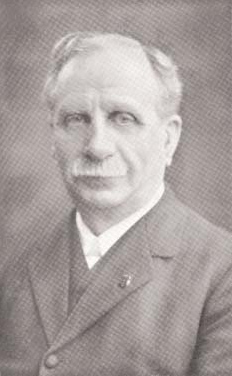
Samuel Chadwick was born in 1860, and passed on into eternity in 1932. Many of you probably don’t know who he is. So I will give a brief introduction of his life. He was a very influential Methodist preacher/teacher whom God used mightily in his day. He was used by God to keep the spirit of early Methodism alive during his generation. As I meditated on his life, it was easy to see that John Wesley was his hero and role model. He was up early in the morning, filled his days with service and self-sacrifice, and was fervent in his pursuit of evangelism. Samuel Chadwick was a household name among Methodist throughout the world. He spent many years as an itinerate preacher in the traditional Methodist style. As the young man matured he was constantly used in administrative positions, and later found himself sitting in the Presidents chair of the Methodist denomination. He was the editor of a weekly periodical, and also wrote several books. His book on prayer is a classic, and rightly so, for he lived in prayer long before he wrote about it. Samuel Chadwick is best known for the position he held as Principle of Cliff College. There, hundreds of students came under his influence. He was a motivator of many varied evangelistic campaigns. Preacher, teacher, administrator, and prayer warrior were some of the many hats he wore through the years as the Principle of the college. As I was reading his biography, written by Norman Dunning, 1933, I was continually impressed by the virtue of this servant of God. I know that a mans virtue comes from his walk with God, but I also know that virtue comes from godly training at home. So let us look a while at his home life.
Samuel’s father and his father’s father were zealous and godly men. His grandfather was converted under one of Wesley’s preacher, and became a sincere and dedicated Christian from the start. He was known for his love of prayer and his faithfulness to the meetings. He would often travel for hours to be at three meetings in the same day and knowing he would hear the same sermon at each place. This is the kind of foundation his father had under him. So Samuel Chadwick’s father was a sincere and pious man, with a gentle integrity about him. He would often sit and tell stories to his son of the great preachers of his early days. I’m sure he had no idea how he was inspiring his son to seek to love God like these men did. Oh the wisdom of reflecting on the saints who have gone on before us. It is a beautiful tool in Gods hand to enlighten the next generation. He said of his father, “ He was the kindest, and most lovable man I have ever known”. Mr. Chadwick had keen spiritual eyes and his judgement was always just. A tender man with a kind spirit.
Samuel Chadwick’s mother had a hard tragic life in her early years. She had been rejected and disinherited by her family, which brought much poverty with it. She was raised in a small cellar dwelling by a very strict Baptist couple. They were very poor but they loved God and brought her up in the nurture and admonition of the Lord. Father and mother meet at the Sunday School. She was a joyful supportive wife, and Samuel never remembered an argument in all his years at home. Praise the Lord! Samuel’s description of his mother is a blessing.
She was smart without learning,
Queenly without vanity.
She was saintly without ritual,
Capable without fussiness.
She was witty without venom,
And merry without being frivolous.
Her speech was filled with proverbs, (that is wise little saying she had learned), and her words were always seasoned with salt. She never sent the poor empty away, but was always caring for the needs of others if she had it to give. Father was always a poor man, and sickly in later years, but she learned to dwell with him contently all their days. Mother was a strict disciplinarian but no one knew it, because the home was filled with laughter and good will. Every evening when her husband came home from a long day’s work her ritual was the same. She would put on a clean apron, and listen for the sound of his shoes walking up to the house and she would be right there to meet him. Mrs. Chadwick took her place in the home as a loving helpmeet, and Samuel never knew of an argument all his days at home. We are not told how many children God gave them, only that there were many around the meager table.
– Wisdom from the Early Years –
- Mother was the strict one in the home, and executed discipline with firmness. This was a great blessing to the children and in some ways may have been their salvation. Samuel said of his parents, “Father would have made a great woman, because of his tender gentle ways, and mother would have made a great man, because of her firmness”. Here we see a bit of a weakness on his father’s part. Many a kind-hearted father has neglected the more difficult parts of loving the children out of natural love for them. This is where sanctification comes in and we must be changed in our nature. I might add that this need often shows up in the mothers also and the same sanctification applies.
- Waste was not allowed in the home. I’m sure that mother’s childhood poverty and the poverty of their own present life demanded that this beautiful virtue was cultivated in the children with life long affects. Was Samuel a poor boy, or a rich boy? What would we say? His words were, “as sure as Joseph was sold into slavery by divine plan, so also my lot in life was poverty”. God used that poverty to mold and shape a choice servant of the kingdom in many ways.
- At the age of eight, Samuel was needed to join his father as a provider for the home. He went to work at the cotton mill with dad every morning at 6 AM. This meant he had to get out of bed at 5:15 each day. Many disciplines and learning experiences came from this one necessity placed on the boy by divine providence. The factory was owned and operated by devote Methodists. This was a blessing that insured a proper work atmosphere for a small boy. Samuel’s peers were grown men most of the time. He learned to enter in to the conversations of the men at break times and lunch. The social issues of his day were on the table for discussion day by day, and the young lad developed personal convictions in many areas by the time he was ten.
- Because of the need to help provide for the family, schooling was done in the evening. It seems his education was somewhat of a semi-homeschool; some direction from his parents, and much of his own motivation to learn. Geography, history and other literature books were consumed continually. The family Bible and a book on the life of Christ were read on a regular basis during those formative years.
- Going to Sunday school and to the assembly that followed was part of normal life in the Chadwick home. It was at an Anniversary service that Samuel was converted to Christ at the age of ten. Shortly after this God impressed him deeply with the challenge of doing everything as unto Jesus Christ. This had a life changing impact on him that he never forgot. He was shining his father’s boots, which he hated to do. The thought of doing it as unto the Lord gripped him. He had not done a very good job. He then picked up the boots again and polished them with zeal, for Jesus sake. He was never the same, and it affected his character for years to come. To do the simplest tasks for Jesus Christ became a delightful habit. Isn’t God good to a ten-year-old boy with a sincere heart?
- Though the family was always poor, father and mother planned a week every year for a special vacation. Every week a little money was set aside for this yearly occasion. A week of fun by the sea was anticipated all year long. Was it luxury? The week was filled with family walks, splashing in the salty water, much laughter, and big round loves of bread. Memories like these tie a family together for life. Even though they were poor they were very wise to make this outing a priority.
- At the age of 15 he joined a Methodist Society Class. An earnest man of sober temperament led the class. These classes were structured to allow all to be involved. Open discussion of the word, testifying, and open confession, were his regular experience. What a beautiful training ground. The weekly exercise developed gifts of thinking and speaking. The class was made up of 25 people from many different backgrounds, which provided a good balance of fellowship for Samuel.
- From the age of his conversion, Samuel prayed. Three times a day he found a way to steel away and engage his heart in fervent prayer. This is not an easy task, since we know what his work schedule was like, and the small house he lived in. He wrote “I went apart three times a day, and prayed in spirit all the time in between”. His parents encouraged him in these holy activities, and later when they say his zeal to prepare for future ministry, they made a place for him to be alone.
- Samuel loved to be alone. He would spend whole days, except for the church service, alone with God. A long walk to a meeting, a quiet service for adults only, he would be there. I’m sure father and mother were very aware of the unusual behavior of their young son, and hid it in their heart.
- Soon after Samuel joined the class, he began to receive impressions from the Lord about preparing for ministry. This was very hard to understand at first because he had very little education, and was of the poorest families of the church. God persisted, and once it was settled, his life took on a very focused intent. He would go to work from six in the morning till six at night. Then by seven he would be at his books. For five hours every evening, he would struggle to educate himself. His courses consisted of grammar, math, geography, history, theology and the Bible. As his parents became aware of his intent to prepare for ministry, they move to a larger house to provide a more suitable place to Samuel to study.
- When Samuel was about seventeen, he felt it was time for him to begin to preach. As was customary of his day, you applied to the district minister for his blessing. This was a very fearful exercise as you can well imagine, but he was soon granted permission. He was given a circuit of three churches, and rotated Sunday by Sunday, walking ten miles on way. Sundays became his greatest delight, and he felt no hardship in his assignment even if the weather was bad. It was here, he began to taste the sweet nectar of giving and giving and giving to others. Now we may object to a young lad preaching to a congregation like this, but no one else would take the task. But let us look a little deeper. This young man was busy about the masters business. He grew in his love for God and his love for man. These are foundational stones for a long and fruitful ministry. We need to help our young people get involved in God’s work. It is a key to a stable Christian life.
- The last gleaning of wisdom we want to look at in Samuel’s early years at home is in the area of finances. All his days at home, he left home at age 21; he gave all his earnings to his parents. He then received a shilling per week for his spending money. His income was absolutely needed every week to help care for the needs of the family. We may look at this and react with thoughts of unfairness, but let us again look a little deeper. The boy developed the humble quality of a servant. He also learned the value of money and how to save and spend it properly. He inherited the manly attitude of a provider without even knowing it. He was faithful with the unrighteous mammon, and when the true riches came his way, he ran after it with his whole heart.
This concludes our study of Samuel Chadwick and his home. There are many principles that we can apply to our homes. We must take the time, and meditate on them until we are able to apply them. One thing that I am finding, as I search for home histories, there are not many to choose from. I don’t know the reason for this yet, but I am pondering it intently. How can this be, that the most important part, the foundational part, of the great biographies is missing? Were the homes weak and therefore nothing was said? Was there no burden or vision to pass on principles of home life to the next generation? I don’t know the answers to these questions. I wonder what would happen if a generation of parents would dedicate themselves to God, and then pour their lives out for the nurturing of their children. Do we have any idea the impact that this could have on our children, and on the world around us? Truly, let us examine our hearts. What is the value we place on our children? Is it worth sacrificing all for their training. It is a giant step of faith that takes many years to prove itself right. I believe, we shall reap, far beyond what we can even imagine.