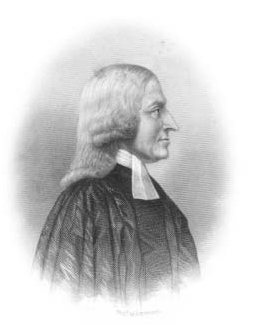
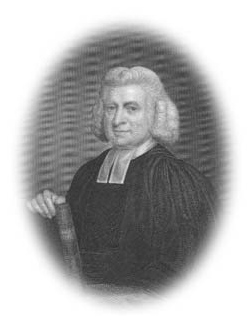
John and Charles Wesley: who doesn’t know these names? Most of us reading this article are not Methodists; however, we all know these two names. I was speaking to a Methodist man on a plane some time ago about John Wesley. I said to him, “I’m not a Methodist, but I want to love and serve God the way that John Wesley did; he is one of my heroes.” In the early years of the 1700’s, England was at one of its lowest places, spiritually, in all its history. Sin abounded of the rankest sort on every level of society, and it seemed that there was no hope for the Church to revive itself and turn the tide of evil. However, as there was by providence a Hannah in the days of Israel, so there was an “elect lady”, Susanna by name, who was brooding over her children in Epworth, England. Unknown to her, she was being led by God to raise a prophet and a psalmist, who would together be used by God to shake a nation, and influence their world. It is now three hundred years later, and still their voices speak loudly to the Christian community of 2001. What preacher has not used an example or word out of John Wesley’s life? What assembly of believers has not sung some of Charles Wesley’s songs? The impact of these two men is immeasurable. Surely God in his foreknowledge was leading and watching over their training. My desire in this article is to look deeply into the home and the heritage that produced these vessels of honor.
As I ponder the heritage of these two men, my heart is drawn to one of the promises given by God concerning our children. It is found in Isaiah 59:21. Written in the context of our adversary attacking godliness, we find this promise to those who turn from transgression. “My Spirit that is upon thee, and my words which I have put in thy mouth, shall not depart out of thy mouth, nor out of the mouth of thy seed, nor out of the mouth of thy seed’s seed, saith the Lord.” What a beautiful way to fight against the enemies of our God. Three generations of people who will not compromise the things of God. This is hard for the enemy to deal with. If only we could get a glimpse of the power of this strategy. You can be sure that the devil is well aware of it and fights with every means to keep this from happening.
We find the previous generations on both sides of the family to be of noble character. Samuel Wesley’s relatives and Susanna Annesley’s relatives were both living on the cutting edge of what God was doing in England in their time. This had a profound affect on them and on their children. Controversies about high church practices, nonconformity, and the low estate of the church were hot issues. The talk around the table was constantly on the right and wrong of the issues of the day. Samuel’s grandfather went to his grave in utter grief over the persecutions released on him and some of his family. Samuel had an uncle whose name was John Wesley who was chased about like a dog, imprisoned several times, and finally died at age 34 of sickness brought on by his persecutors. It was said by most that young John was the image of his great uncle John, in fiery zeal and energy. On Susanna’s side we find it the same way. Her father was a very well known Puritan preacher. Dr. Annesley served in several Anglican churches until the controversies on nonconformity came to a head. He withdrew at great cost and persecution, and became a Puritan. He served for thirty years in the heat of the battles under constant troubles. He was considered by most to be a second Apostle Paul and one of the most influential Puritans of his day. So we can see by these things, that Charles and John’s parents inherited a great burden for the church to return to purity and power. This burden was then passed down to these two boys as they grew up. It is easy to see why, once these two men realized they were on top of a major wave of change, they rode the wave with all their heart and soul. Now lets look at the parents.
FATHER WESLEY
Samuel, the boys’ father, was the preacher in the village of Epworth in the Church of England. He held several other positions before this, but this was where life unfolded for the Wesley boys. He was a man of discipline and energy. As was mentioned already, he had a lot of strong opinions. It seems that at times this brought him and the family some persecutions that probably could have been avoided. However, the boys grew up in an atmosphere of periodic persecutions, which prepared them for endless attacks from the enemy of our souls. Father Wesley’s patient endurance in these many trials was a beautiful example to them. A pastor and a writer, he was kept very busy in the study, as well as constant visits to his people. He was tenacious when it came to compromise, and his sons caught a good bit of this quality from him. Even though Mrs. Wesley is known for the methods of her household, it is interesting to note that Samuel was of the same character. An orderly, methodical life of good habits was his rule. He was a man who from his youth was known for his compassion on the poor and his constant visiting of prisons. He paid his own way through college living at poverty levels with contentment. Father Wesley was a poet. All through his life he was working on poems and prose. Nothing of any importance ever came out of this work, except one of his sons wrote a few songs. Yes, this is where Charles undoubtedly received talents and exercise in these areas. All through his years in the home, Charles constantly saw his father working on the rhyme of some poem. Oh, the wisdom of God is past finding out. It seems that Samuel had many dreams and visions that he longed to carry out, and was a bit of a prophet also. He drew up a missionary plan to reach out to China, India, and all the British territories, and then offered to go himself with his family and see it through. He also prophesied on his deathbed of the coming revival in England, telling his sons, “you will see it, but I will not”. In conclusion of father Wesley’s influence, let me say this yet. He was not the dominate figure in his home. He was not the active father that I feel God would have had him to be. Yet his home was known far and wide as one of the godliest there was in his day. I know he had much to do with this.
MOTHER WESLEY
Susanna, the boys’ mother, grew up in a very godly home. Her father, being a man greatly used of God, brought multiplied blessings upon the children. It is said that there were 22 children born to the Annesley household. The days were serious, and Susanna matured early in life as she listened to the many debates about spiritual issues. She was an ardent student and was well acquainted with Greek, Latin, and French while still in her teens. Her books were the Bible, theology, and the writings of the early church fathers. Because of the times she grew up in, she was wrestling with deep spiritual issues while other girls were still playing with dolls. Mother Wesley was without a doubt an unusual young lady—devout, thoughtful, and full of the virtues of a Christian woman. Many historians call her the mother of Methodism because of her clear methods of training the children. Balance was the word that best describes her character—a beautiful blend of kindness, discipline, sobriety, and joy. She consecrated an hour every morning and evening to entire seclusion for meditation and prayer. As a mother she bore eighteen children for her husband Samuel. Eight of these children died in infancy. It is hard for us to imagine the agony of having to bury eight precious little ones. As I studied the home, it seems that some of her strong opinionated nature made some problems in her relationship with her husband, but overall, she gave herself to the training of the children and to managing a very busy pastor’s house.
MOTHER WESLEY’S METHODS
There are many testimonies written about the Wesley home. These records give the idea that it was almost the perfect Christian home. Biographies can be a bit one-sided, especially where you have so famous a person as John Wesley. Although human respect tends to be this way, wisdom is justified by her children. The proof is in the pudding, and we all must admit that many things were done right and the world has benefited from it. All the records that are written about the Wesley home indicate that Mrs. Wesley was the dominant figure in this home. Her education, gifts of organization, and strong personality, as well as Samuel’s busy ministerial life, all worked together to lay the stage for this. Even though this is not as biblical as we would want, this woman poured her life into her children with purpose. We want to turn our attention now on how these holy purposes worked themselves out into practical methods of child training.
An Orderly,
Scheduled Life
Susanna understood the deeper implications of a disciplined life. Because of this, shortly after the birth of a child, she began to direct the infant into a well-ordered schedule. There was a time to eat and a time to refrain from eating. There was a time to sleep and a time to be awake. She worked at developing these habits into the life and memory of each child. This was applied down to the hours in the morning and afternoon when a new baby would take a nap. Careful attention was devoted to this till the child would quietly go to sleep when laid in the crib. Then, of course, this also put the times of feeding on a regular schedule. These disciplines were developed with more order and schedule in mind. The child must fit into the normal segments of her orderly household. Rising times were punctual; family prayers, breakfast, and school hours were all by the clock. Quiet times for each child, evening prayers, and bedtime were the same time every day. There were times, as in all households, when providence disrupted this order, but she would always turn the family back to a well-ordered life. The stability and security that these principles bring into the life and development of a child are immeasurable. Mother Wesley pursued these goals with unwavering persistence. It is clearly evident: she saw the hidden wisdom, the affect that this would have on her children.
She Guided
Their Appetites
Susanna knew that if the child did not learn to control its appetites, the appetites would control the child, possibly all of its life. Because of this, there were strict rules concerning eating. She trained the children to eat foods that they did not care for and to drink things that were distasteful. Medicines were given with dual purpose—to aid the child in health and to help them in discipline. Eating between meals was forbidden and seen as a destructive habit to be feared. Sweets were allowed in the house, but this luxury was supervised with much care.
The Home
Must be Quiet
The children must not control the atmosphere of the home. There was much to be done each day, and for all to profit from these many activities it must be quiet. I think it is also good to bring in here that Susanna knew the benefits that each child would gain if it mastered this quality of quietness. “Always talking, never learning,” as the old proverb goes. By the time a child was one year old, it was trained to cry softly. This was done by both positive and negative measures. The noise of a crying child was seldom heard in the household, and others would testify that you would hardly know that the house had children living in it because of the quiet atmosphere that prevailed. The children were taught to be quiet at family prayers and even to ask a blessing at the end by making a sign rather than speaking a word.
The Child’s Will
Must be Conquered
Here I will quote Mother Wesley’s very words, which are powerful and full of deep insight. “I seek to bring the child’s will into subjection at an early age, and then endeavor to keep it there until the child gives its will to God.” She continues, “This is the only strong and rational foundation of a religious education, without which, neither precept or example has any effect.” Man’s will is at the center of a true religious life. If there is no surrender of the will to the parents, it will be much more difficult to surrender that will to God when he calls. If there is no surrender of the will to the parents, all training in spiritual and domestic areas is frustrated. This is of utmost importance and must be acquired before other progress can be seen. A loving relationship wedded with the proper use of the rod will give the desired end if you persist.
A Very Orderly
Household School
This is the term used by Susanna to describe her method of educating the children. For twenty years, she invested six hours a day in this most holy task. We can see her goal for this school so clearly expressed in words she wrote to her son John later in life. She wrote to him: “There are very few who would devote twenty years of the prime of their life in hopes of saving the souls of their children.” By these words and the way she ordered the school, we can see that she was not set on a mere academic education. Each child received a passion for learning and a passion for righteousness through her influence. The family school was opened and closed with singing each day, and each child learned to read using the Bible for their primer. Mother Wesley wrote three books for the soul purpose of use in her home school. They were, A Manual of Natural Theory, An Exposition of the Apostles’ Creed, and An Exposition of the Ten Commandments. At 5:00 each evening she divided the children into groups of two. She would put a child who could read, with a child who could not read. They then proceeded to read the Psalm of the day and one chapter in the New Testament. Every evening she spent some time conversing about spiritual things with one of her children, so evaluating the growth of the child. Beloved, this is an awesome revelation of the greatest secret behind the fruit of these two men. What an example of a devoted mother. She did literally waste her life on her children. She blocked out twenty years of normal society to pour herself into this most honorable profession. Ten of her children lived to adult age. All of them became devoted Christians, and they all died “in the Lord.” There is much we can learn from this example. It is true that Susanna had a couple of maids to help her keep the house running while she conducted the school, however, we must remember that everything was done by hand.
Molding Godly
Character
Character, that is moral and ethical strength, was one of the reasons for all this training. There must be in each child a practical, operational visible outworking of the Christian faith. As I gazed into this godly home, it was easy to see that Mrs. Wesley planned and carried out many activities that would place virtue into the fiber of the children. What were the tools that she used to do this? The old English country setting was a tool in her hands, as there were many chores to do. Caring for animals, milking cows, and caring for the garden were a few of them. Poverty was also wisely used to form life-long attitudes about money, time, and contentment. A promise was never allowed to be broken, and lying was a vice to be feared. She even taught the children that if they had done wrong, they would not be spanked for it if they would quickly confess with a broken heart, before they were caught. We have mentioned the orderly, scheduled life of the Wesley home already, however, it is worthy to bring it up again as we ponder the area of building character. Repeating good actions over and over again forms good habits. Thus, having those good actions set in order by a schedule is a tremendous aid. There is a time for every purpose under heaven. Each day there is a time when the child reads the Bible, puts away his clothes, and milks the cow. A child grows up doing these varied activities without thinking about it. Do we see the value of these?
A Loving Atmosphere
in the Home
All of what is written above may seem a bit too grave and mechanical as we look at them by themselves. But we should also stop and meditate on the oil that made all this machinery run so smoothly. Love—agape love, sacrificial love—was the prevailing spirit in the home. Susanna was a very affectionate mother. She was not a drill sergeant, demanding strict obedience or else. Many said in her day that her home was one of the most loving homes they had ever seen. The children noticed all of her sacrifices, and some of them almost idolized her. The discipline coupled with love created a bond between them that was a beauty to behold. Her kind and gracious character mixed with the hours she spent with them turned their hearts continually to honor and respect. Susanna had times of fun and games, where the children were allowed to wrestle and laugh and just make noise, as children must do. These last points are last but not least. You cannot have the rigor and discipline in the above-mentioned points by themselves. It must be wedded with a love that flows from heart to heart and back again. Let us keep the right balance.
MOTHER WESLEY’S FRUIT
It is written in many of the history books, “Susanna Wesley was the mother of the Methodist Church”. When I began to read and research for this article, I read these words more than once. I must admit, I reacted a bit to them, thinking that the biographers were stretching things as they often do. I have spent hours studying this remarkable woman, and I have repented about my reactions. There is much truth in this statement. Why do I say this? As you study the Methodist movement you will quickly see that there were several distinct characteristics of this movement. The areas of distinction were the very things that caused it to be such a force in England and America. Let me list a few of them for reference:
- A practical sanctified life
- A personal devotional life
- A hatred for sin and unrighteousness
- An orderly life
- A revival of the Christian disciplines
We could increase the list by several more points, but these are enough to make my point and the point that most historians make about Mother Wesley. As we look over the list we can easily see that these are some of the very methods that Susanna used in the training of the children. The early Methodists were given their name by their many critics. They looked on and saw the people exercising methods in their pursuit of God. They mockingly called them methodists. John and Charles Wesley were simply encouraging the members of the societies to excel in the things they had learned at home. John was the organizer and administrator of the societies. Where do you think he got those abilities? Charles was a preacher, but was most widely used in his continuous production of godly hymns. Where do you think he got that ability? So, what about Mother Wesley’s fruit? Was she just a busy mother who spent her days on activities that wouldn’t count? The answer is no, she was being directed by God to raise a godly family in a day when ungodliness prevailed. God mysteriously put His hands on her hands to prepare for Him two vessels of honor, meet for the master’s use. She yielded to His hands and by faith she sacrificed twenty years, training, spanking, reading, praying, and loving. The results are still being felt on many sides, and in many places her voice and her son’s voices are still being heard.