Hail Mary, Full of Grace, The Lord is with thee. Blessed art thou among women, and blessed is the fruit of thy womb, Jesus. Holy Mary, Mother of God, pray for us sinners now, and at the hour of death. Glory Be to the Father, and to the Son, and to the Holy Spirit. –the Hail Mary (a Catholic prayer)
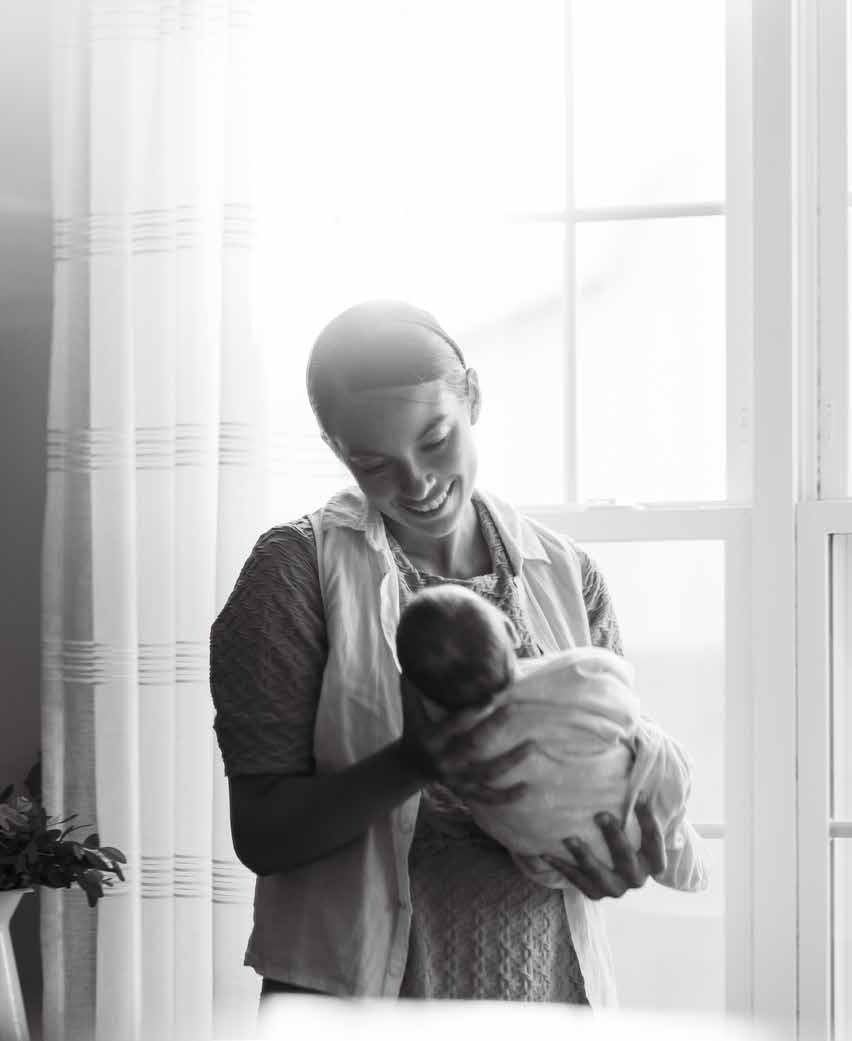
Such is the remembrance of the mother of Christ, one who found favor with God, but should this be the way in which she is remembered? Who was this daughter of Israel, and what is her impact on the Christian story?
To accurately determine her place in the story of the church, we must first begin with her own story. Mary, according to church tradition, spent her early years in the Galilean town of Nazareth. As a young woman, she was betrothed to Joseph, a carpenter from the tribe of Judah, descendant of King David. In a nation firmly under the thumb of the mighty Roman empire, Mary prepares herself for a happy but unremarkable life, envisioning the blessing of marriage and a family.
As we, in posterity know, she was not to be just another mother and wife living her life in the anonymity of the Judean hills. God’s favor rested on her, for her virtue and her humility, and for her readiness to pursue the path God ordained for her life. This calling to a greater service to God came now, after her betrothal. Confronted by Gabriel, the messenger of God, Mary stands ready to obey, not esteeming herself to be capable of carrying out the work God has given her, but instead trusting God’s power and foresight to choose and direct this sudden shift in her life’s plans, for she is to be mother of the Most High, Saviour of His people. Even though she does initially question Gabriel as to the plausibility of the conception of this divine child, at his reassurance of God’s intent, and of the miracle taking place with Elizabeth, she simply believes.
Does she tell anyone what has transpired? It is unclear what her family knows, but soon enough Joseph becomes aware of what must at first have been a most alarming turn of events- his youthful bride-to-be is carrying a child, in a time where adultery is punishable by death. As the Bible states, Joseph is first minded to “put her away privily”, but then he too has a life-changing visit from God’s messenger, carrying confirmation of what Mary has already been told—that the child is to be the Son of God. (-see Luke 1:31-35)
Joseph, displaying his godly character and faith, acts upon this new directive, marries his betrothed, and cares for her. The events of Mary’s visit to Elizabeth unfold, further confirming the holiness of the child she is bearing, and then the Roman census is decreed. In the humble town of Bethlehem, Mary brings forth the Savior of the world, and cares for Him in His infancy.
Throughout the coming years, whether it be a visit from the Wise Men of the East, or Jesus’ three-day discussion with the priests and elders at Jerusalem, Mary keeps those signs of His Godly origin and deity in her heart. Thirty years pass, and her son begins to perform miracles, to gather disciples to Himself, and to move about the countryside, preaching, teaching, and healing the crowds that flock to his message of peace and hope.
But as Jesus embarks on the monumental final years of His earthly life, where do we find His mother? The Bible gives us numerous stories of her path crossing her son’s path during those years. First, she attends a wedding in Cana. As the day of feasting commences, wine is brought out for the guests in abundance. Perhaps there are excessive numbers of guests, or excessive drinking, but the wine stores dry up, and the wedding is threatened with the disgrace of thirsty guests. Mary recognizes what to do. She does not have a solution, but she knows Who does, and goes straight to Jesus to inform Him of the impending catastrophe, and true to her faith, Jesus does have the solution. Water, turned to wine, saves the wedding, and marks the beginning of His miracles.
Mary, having kept all the signs of Jesus’ power in her heart, seems to have recognized to some extent the intent of His power much sooner than many of His disciples, including many of His own siblings and cousins. Even when His hometown turns on Jesus, attempting to throw Him from a cliff, Mary does not seem to waver in her belief in the words of Gabriel, that the Spirit of the Most High rests upon her first born.
Nothing, however, can prepare her for the Crucifixion. There on the hill of Golgotha, her dying Son gives the apostle John responsibility for her care. Following the resurrection and ascension, Mary is numbered among those praying for the Holy Spirit, but from there our immediate record grows dim. Outside of the Bible, we can gather that John did continue to care for her, taking her with him to Ephesus, where she would live out the rest of her life in its church.
Now we approach the question: what then is her significance to our faith? Does she intercede for sinners, as stated in the well-known Catholic prayer? Did she have an extra measure of insight into the truths of Christianity, perhaps drawn from the relationship with her son? Questions such as these have led to varied and often incorrect beliefs throughout the history of the church.
There are three main ideas on the attributes of Mary which have led the broader church into error regarding the nature and importance of Mary to the faith. First among those is belief in her perpetual virginity—a doctrine which was of importance to the Gnostics in their arguments against the humanity of Christ. Despite no assertions amongst the Gospels, Epistles, or any other sound writings of the first three centuries of Christendom, the idea that Mary bore no children following the birth of Christ is first introduced in the heretical Protevangelium Jacobi, a 2nd century work that provides an elaborate story of the divinely sanctioned birth of Mary through visions to her childless parents, her commitment to the Temple at an early age, and how she was hand-fed there by an angel until an appropriate age for betrothal. The record becomes even more fanciful, as now the priests of the temple begin to search, not for a suitable husband for Mary, but a guardian from among the most prominent widowers of Israel, one of whom happens to be Joseph, in this story already having buried his first wife, and being the father of several children. Mary is put under his care, but remains in the Temple, where Gabriel then delivers God’s message. Upon discovery of the conception of Christ, Joseph is called to the Temple, and he and Mary are questioned by the priests, who believe that Mary’s pregnancy will violate the sanctity of the Temple. Proving their innocence by exposure to “the water of the ordeal of the Lord”. In this way they are released to go to Bethlehem, where matters proceed as normal- the inn is full, the stable houses the young Messiah, and the family eventually flees for Egypt.
This false doctrine was further perpetrated by Jerome, who in his youth seems to have set great store in it. To explain the mention of Jesus’ brothers, he devises a story in which Mary has a sister also named Mary, and it is this Mary, sister of Mary, who is the mother of James, Jude, and the others, and not, in fact, Mary.
As foolish as these knots of doctrine may seem, their effect is nonetheless felt in the nominal Church. First, as the Gnostics argued, Mary being of purportedly divine origins strengthens the argument that Jesus was not true flesh and blood. At stake in this argument lies the whole legitimacy of Christianity, for if Christ was not human, than how are we to know that the struggles and temptations that we encounter can be born with the power that He gives us? The miracle of His holiness lies not in the fact that Christ was divine—it lies in the fact that not only was He human, but He was also blameless, sinless, and perfect. Therefore, removing the humanity of Christ negates His message of hope to a lost humanity.
The second misconception about Mary carries much of the same weight as the first. In a slightly more contentious point, Mary is often portrayed as being completely sinless, born without the nature of sin. This corresponds roughly with the heretical story of her divine conception and service in the temple, which sets her up as a deity in a questionable position between God and man. Where in the Scriptures is there a place for a divine being born of man, but sinless, other than Christ? This belief, however, is not as widely accepted and the first point, as even Augustine repeatedly asserts that she was born in original sin.
Thirdly, and most heretically, is the belief that Mary intercedes for sinners. Firstly, this is the unique position of Jesus, as can be seen in the Lord’s Prayer, where we are to pray in the specific name of Christ. This doctrine came into popular belief in the early 4th century- even writings of the late 3rd century will refrain from even calling her the mother of God, a term which would become quite popular within a half a century. Much of the acceptance of a more intermediary and important role for Mary seems to have come into place because of her popularity among the laity of the Catholic Church. Appeals to Mary, used rarely and with much hesitation in the 3rd century, became marks of orthodoxy, as did the exhibiting of figures of the Holy Mother and Child.
The tremendous error to which this broadly popular worship of Mary reached is well documented in the words of the orator Proclus when preaching at a festival of the Virgin of Constantinople, where he described her as “the spotless treasure house of virginity… the one bridge between God and man.” Here there is a clearly heretical teaching, completely dethroning the role of Christ, but Proclus is not done deposing of Christ and enshrining Mary, as he continues: “through whom (Mary) the Trinity is glorified and worshipped, the Cross of the Saviour exalted and honoured, through whom Heaven triumphs, the angels are made glad, devils driven forth, the tempter overcome, and the fallen creature raised up even to heaven.” And the people Proclus was preaching to? They accepted it with enthusiasm, sheep with a wolf in their midst.
There are, additionally, several factors that led the common people of the church to accept the veneration of a mortal with such readiness and fervor. The Arian controversy seems to be an acceptable first step in arriving at this position. The controversy began with a debate on the nature of Christ, with the principal orators involved being Arius and Athanasius of Alexandria, two theologians from Alexandria, Egypt. The thought of Arius was that Jesus was created by the Father, a position which immediately brought into question the unity of the Trinity and the role of Christ in the Trinity. At the First Council of Nicaea, the debate raged, and Athanasius emerged as the leader of those opposing Arius. Discussion and differences would follow those two men throughout their service. By 360 the issue had been officially settled, with the decision that Father and Son were both uncreated beings, being of one another but with different roles in the Trinity. Unfortunately, the strength of statement required to resolve this manner seems to have portrayed Jesus to the laity as a distant, awful part of the Godhead instead of the caring mediator that He is. Thus, the character of Mary, humanized, but with a touch of the divine, was appealing to those hungry for hope of reconciliation to God, for if they thought of Jesus as a heavy-handed judge, where were they to gain an ear to listen to their woes, and a mouth to approach God with their prayers?
But how does this view stand when compared to the Scripture’s mentions of Mary and the role she played in the life of Jesus and the continuation of the church? Apart from her prominent role in the birth of the Christ, there are several mentions made of her in Scripture: coming in faith to Jesus at the wedding, trusting Him to supply the needed wine, and being committed to the care of John by Jesus at the site of the crucifixion. Both of these instances provide a glimpse into the relationship between mother and son, and the role Mary had within the church.
First, at the wedding in Cana. At this early point in Christ’s ministry, His working of miracles has only started and yet Mary knows Who to come to when a problem arises. We know from the aftermath of the incident where Jesus was left alone at the temple, that Mary notices and remembers instances where Christ shows the divine nature of His calling, and by this action of making a simple approach and request for aid Mary shows a developing faith in her son as the Son of God. We can see that she is not divinely set above others—she recognizes Who is the source of spiritual power and she acts on that recognition.
Secondly, the interaction between Mary and Christ at the crucifixion shows the love and respect Jesus had for His mother. Even on the point of death, He cries out to her, seeking her as any son would seek the love of a mother in the time of ultimate trial. His cry, “Woman, behold thy son!”, shows the deep connection Christ had with Mary, as is further evidenced by the command He gives John, who from that time forward cares for Mary. This scene also reinforces the nature of atonement and intercession for sin—it is Christ on the cross, dying for sinful mankind and later ascending to intercede between them and God.
Clearly, then, Mary and Jesus had the attachment and relationship typical of humanity. How then did they address the spiritual authority and mission that was given to Jesus? Luke 11: 27-28 seems to hold an answer for how Jesus viewed His mother within the broader scope of the church. A woman from the crowd has just blessed the mother of Christ, who responds with these words: “Yea rather, blessed are they that hear the word of God, and keep it.” Jesus clearly states here that the blessed are those who obey God, and the further role of Mary in the church remains as a believer (nothing more), saved by the sacrifice of Jesus Christ.