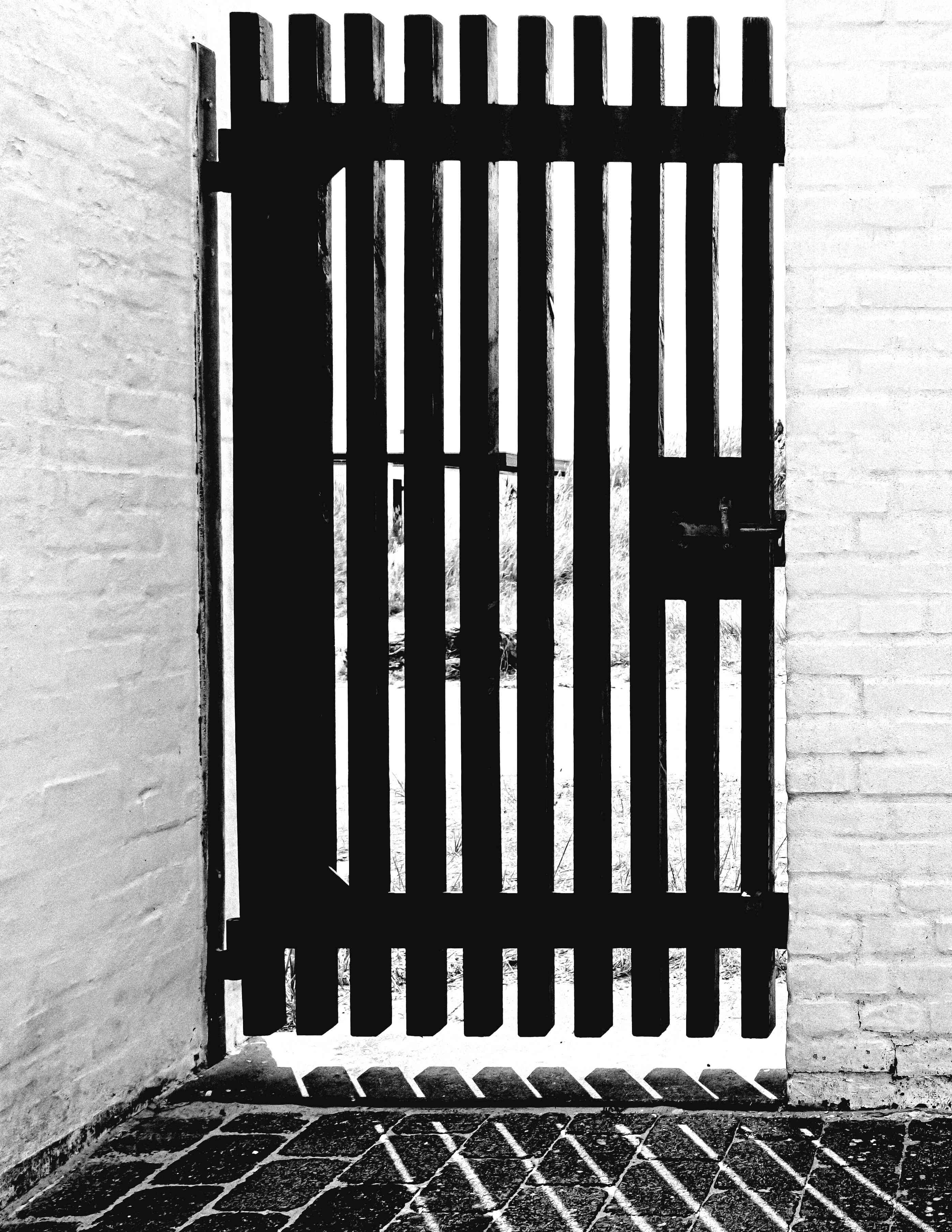
Enter ye in at the strait gate: for wide is the gate, and broad is the way, that leadeth to destruction, and many there be which go in thereat: Because strait is the gate, and narrow is the way, which leadeth unto life, and few there be that find it –Matthew 7:13-14.
Of all the word pictures painted by our Lord, it seems this one remains, for the most part, unexplored. On numerous occasions the disciples asked their Master to explain the parables he taught. The parable of the Wheat and Tares resulted in a detailed explanation that leaves little doubt to His intent. …He that soweth the good seed is the Son of man; The field is the world; the good seed are the children of the kingdom; but the tares are the children of the wicked one; The enemy that sowed them is the devil; the harvest is the end of the world; and the reapers are the angels –Matthew 13:37-39. But in the picture presented as the strait gate, we receive few defining details and are even told that there be but few that will even find it.
The parable is followed by some intense teaching against false prophets, corrupt fruit, and empty words. Some souls will have a pretense of powerful prophecy while missing the gate. Others put forth a front of fruitful freedom but are foreigners to the strait gate. All professing words of goodness, grace, and godliness avail us nothing to the entrance into this gate. Those tramping through the broad gate are obviously more than just the world’s gross, hardened sinners. Rather, the two gates seem to be representative of those who have entered a religious pursuit of life.
Straight and Narrow, as ascribed by the early American revival movement, generally meant “a life of abstinence” from the vices of sin. This is certainly not an entirely wrong perception, yet it seems to differ from the profession of the broad group that had prophesied in thy name? And in thy name have cast out devils? And in thy name done many wonderful works? –Matthew 7:22. To free ourselves from the dregs of evil is quite indispensable to any good living, but he that would enter the strait gate will be he that doeth the will of my Father which is in heaven. –Matthew 7:21. Also, to place asceticism, the doctrine that a person can attain a high spiritual and moral state by practicing self-denial, self-mortification, and the like. –dictionary.com, at the portal of the post seems to invite a works-based, monastic kingdom. Self-denial sings in perfect harmony with the Christian life but will never be found as the sole melody. The ordinances of this world, such as …Touch not; taste not; handle not [are] … after the commandments and doctrines of men. –Colossians 2:20-22. While we applaud the efforts of anyone who has denied himself of this world’s ease and enjoyment for the betterment of others, we cannot offer it as the prescription of the strait gate to the abundant life.
Some will attest that the gate is “Jesus” and all who will enter the kingdom must enter through Him. This certainly carries some merit, as well. In another parable, Christ described Himself as the door of the sheep –John 10:7. Who would care to deny Christ of such a preeminent position? Yet, we have noticed that the “Jesus only” movement has opened the gate so broadly that it can hardly be considered “strait”.
Regardless of our interpretation of what the gate may represent, the decided emphasis given here is upon the adjectives, straight and narrow, as opposed to wide and broad. Strait (Sten-os’) means narrow (from obstacles standing close about) –Strongs. Narrow (Thlee’-bo) means to crowd (literally or figuratively): afflict, narrow, throng, suffer tribulation, trouble –Strongs. Here we find some solid definition to our entrance. We must endure an uncomfortable squeeze between two posts if we are to find life. Here we can behold the testimonies of those who have entered there.
- …we told you before that we should suffer tribulation; (Thlee’-bo) –1 Thessalonians 3:4.
- …they wandered about in sheepskins and goatskins; being destitute, afflicted (Thlee’-bo), tormented –Hebrews 11:37.
- We are troubled (Thlee’-bo) on every side, yet not distressed… –2 Corinthians 4:8.
Herein is an entrance beyond the discipline being taught by the scribes. …when Jesus had ended these sayings, the people were astonished at his doctrine: For he taught them as one having authority, and not as the scribes –Matthew 7:28-29. The strait gate of Christ rested in a principle beyond word-worn profession. But I have a baptism to be baptized with; and how am I straitened till it be accomplished! –Luke 12:50. This is where Christ got His authority: tenaciously doing the will of His Father in heaven by submitting Himself into the hands of men.
One Thing Needful
…The scribes came upon him with the elders, And spake unto him, saying, Tell us, by what authority doest thou these things? or who is he that gave thee this authority? And he answered and said unto them, I will also ask you one thing; and answer me: The baptism of John, was it from heaven, or of men? And they reasoned with themselves, saying, If we shall say, From heaven; he will say, Why then believed ye him not? But and if we say, Of men; all the people will stone us: for they be persuaded that John was a prophet. And they answered, that they could not tell whence it was. And Jesus said unto them, Neither tell I you by what authority I do these things –Luke 20:1-8.
If the scribes, priests, and elders could have answered this one question they could have understood the power source of His authority. There is an authority of heaven and an authority of men. These two make up the posts of a very strait gate. At times they may even conflict, leaving the conscientious Christian feeling stuck between a rock and a hard place. When earthly authorities overstep their bounds leaving no room to serve God in a Biblical manner, we must choose …to obey God rather than men –Acts 5:29. It is here that we will experience the thlee’-bo of the gate.
There is a God-given authority vested in men by their position: government authorities, workplace authorities, parental authorities, and church authorities, to name a few. Let every soul be subject unto the higher powers. For there is no power but of God: the powers that be are ordained of God. Whosoever therefore resisteth the power, resisteth the ordinance of God: and they that resist shall receive to themselves damnation –Romans 13:1-2. This is strong language that we dare not ignore. Yet the disciples answered such authorities …and said unto them, Whether it be right in the sight of God to hearken unto you more than unto God, judge ye. For we cannot but speak the things which we have seen and heard –Acts 4:19-20. While the disciples carried no personal angst against the rulers, there was a narrow way that they were walking in. Narrow, not because they served God alone, but because they had duel posts to submit to. Patriotism wants to serve man to the exclusion of God. Modern Christianity wants to serve God to the exclusion of man. Both paths are broad, for in either case, we move the opposite post to a position that is less hurtful to our humanity and more pleasing to our palate.
Submission Activates Power.
The authority ushered in by Christ Jesus left His followers astonished and amazed—But when the multitudes saw it, they marvelled, and glorified God, which had given such power unto men –Matthew 9:8. Their experience with authority was a mere social, hierarchical subordination that left them oppressed, pushed down, and forced into subservience. Christ exemplified a new and narrow way. It was not a casting away of civil authority but an empowerment of it. It was a strait gate that respected the authorities enough to volunteer to transport a soldier’s pack the second mile. Today, it is an inner authority that empowers us to respond respectfully and to glorify God while doing it. Wherefore ye must needs be subject, not only for wrath, but also for conscience sake –Romans 13:5. To embrace our authorities in our heart is ultimately the inner channel to freedom and a deterrent to legalism, for it takes to task the issue of sin, sulking, and selfishness, while replacing it with righteousness, well-being, and peace. While many disdain these earthly authorities and remove them as far as possible from their hearts’ compliance, they only succeed to broaden the posts and thus forfeit the life that the strait gate brings. There are a mere few who will find the blessedness within the posts.
These will find life within the confinements of the strait and narrow provided by God and…
…Governments
The humble request of the centurion of Capernaum made Jesus marvel—…Verily I say unto you, I have not found so great faith, no, not in Israel –Matthew 8:10. He was a man with authority… and under authority. He seemed to understand the correlation in subjection to earthly authority and the exercising of it, for he entreated Christ not to come under his roof but to …speak the word only, and my servant shall be healed –Matthew 8:8. The gate formed by his overseers and the sincere love of his servants under him often left but little room for personal preferences. Yet, the power entwined in his speech was such that the Son of God readily complied with his request!
Joseph repeatedly found himself in tight places between God and the people he served. This resulted in being raised to the second ruling power in the most prominent nation on the earth. Esther and Daniel experienced similar plights. At times, the posts were so narrow that they wondered if they might perish, but the end result was always power… power to live in holiness, power to respond in righteousness, power to overcome victoriously, and power to endure faithfully unto the end.
…Masters
While slavery has been predominantly eradicated in our modern world, the relationship to a master still exists. Employers exercise authority over their servants and greater responsibility is ultimately given to those who submit wholeheartedly to it. The authority given to Eleazer is amazing and inspiring. Abraham trusted him to secure a wife for Isaac; He was even permitted to determine the rules. This colossal commitment left the indentured servant in a tight squeeze between the Master God and his master Abraham. And he said, O LORD God of my master Abraham, I pray thee, send me good speed this day, and shew kindness unto my master Abraham s–Genesis 24:12.
The American workforce has grown very accustomed to refusing anything they esteem as an unreasonable mandate from their employers. In faithless defiance they readily strike and kick the posts further apart to their broad preferences. This attitude has left them spiritually anemic and powerless. The Ethiopian eunuch served God while also serving under Queen Candace. Though his world was narrowed beyond what most of us could ever imagine, …he went on his way rejoicing –Acts 8:39, His life stands as a stellar testimony to Isaiah’s prophecy …neither let the eunuch say, Behold, I am a dry tree –Isaiah 56:3.
…Parents
Children, obey your parents in the Lord: for this is right. Honour thy father and mother; (which is the first commandment with promise;) That it may be well with thee, and thou mayest live long on the earth –Ephesians 6:1-3. This one should be obvious to any spiritually awakened individual. Children, who have parents, have an evident advantage in life and those who respect them, fare even better. Furthermore we have had fathers of our flesh which corrected us, and we gave them reverence: shall we not much rather be in subjection unto the Father of spirits, and live? –Hebrews 12:9. Life is found by those who can embrace their earthly fathers and the “Father of spirits”. Those who claim God as their Father while viewing their parents as a mere obstruction to the path they wish to walk in, will sooner or later be walking through the broad gate to destruction.
…Husbands
As Jesus entered into dialogue with the Samaritan woman at Jacob’s well, he began to describe a life that she desperately wanted—… Sir, give me this water, that I thirst not, neither come hither to draw. Jesus saith unto her, Go, call thy husband, and come hither –John 4:16. Christ was seeking to convince her that the abundant life will be found between the two posts. She had previously had five husbands and undoubtedly had not found contentment with any of them. Women who stand up for their rights kick at the narrowness of the gate and forfeit their God-ordained dignity. A woman at rest within the confines of her authorities is not oppressed but is actually liberated and empowered. For this cause ought the woman to have power on her head… –1 Corinthians 11:10. The headship veiling is not just a symbol of submission, nor is it merely a form of protection, it is spiritual power. Her wholehearted subjection fuels a dynamic marriage as she embraces her husband as “lord”, and in doing so, she becomes a faithful vessel of liberty, power, strength, and delegated influence.
…Church Leaders
These things speak, and exhort, and rebuke with all authority. Let no man despise thee –Titus 2:15. Many self-proclaimed believers reject any outward display of authority in the Church. To the western mind, church authority is negatively associated with legalism, communism, bondage, and heaviness. But just as a disregard for spiritual authorities stripped Saul of his kingship, so likewise this attitude robs the believer of true authoritative power and nobility. For rebellion is as the sin of witchcraft, and stubbornness is as iniquity and idolatry… –1 Samuel 15:23. Efforts to choose …a way which seemeth right unto a man… –Proverbs 14:12, leads to bondage, but choosing to walk in surrender and subjection leads to liberation and life. Satan promised Jesus the entire world if He would only throw off the “yoke” of obedience to God. Instead, He set His face like a flint, endured the constraint of subordination, and ultimately liberated the entire world.
Subjection Produces Spiritual Authority
God’s authority and earthly authorities are rooted within the opposing posts of the strait gate. Those fully subject unto them both experience a living authority found within the gate. It brings power unto people rather than power over people. It produces liberty in Christ… the right to the tree of life… freedom from fear… health to our bones… power over unclean spirits… grace to train children… strength to preach and convert souls… and it is the ultimate deterrent to legalism. Faith that comes through wholehearted and humble subjection is the most suspect and under-estimated power available to mankind. Few there be that find it. Why? Because it is fastidiously founded and formulated between the posts of the strait gate and the narrow way.