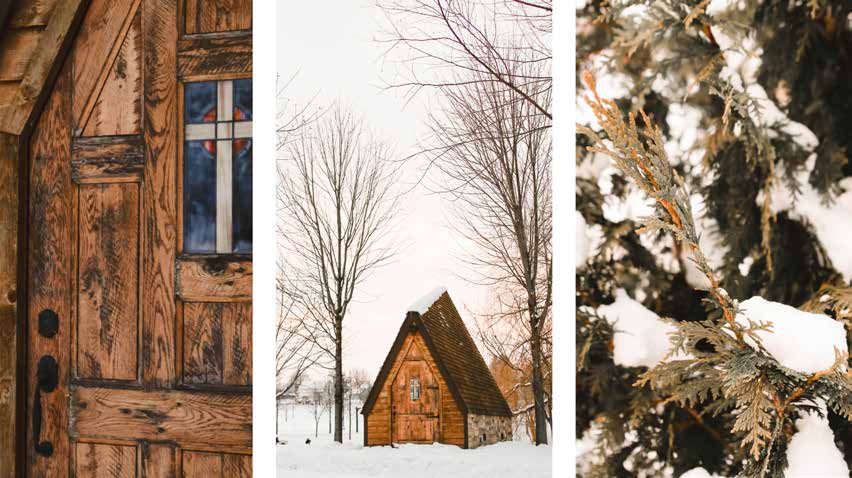

And it was at Jerusalem the feast of the dedication, and it was winter (John 10:22).
As the maddening winds howl about him, man turns his collar to the cold and damp. Little praise arises for the season that greets him at his weakest point and seeks to discomfort and discourage him from the zest of life. Winter settles in as a formidable authority and arouses anxiety not so much by the infliction of pain but the removal of the pleasant. As we cross the equinox, “the days get longer, and winter gets stronger”, states the old proverb, and it remains incisively correct.
Winter is the season of profound, persistent cold that drives the frost deeper and thickens the ice on the ponds. Man and beast battle its ferocity, and even the lifeless machinery rebels against winter’s adamant arrival. Chilly drafts penetrate every crack and crevice, forcing their heartless presence into the most private chambers. As the woodpiles shrink, utility bills increase in the struggle to resist winter’s array of armed forces. While a few gay tunes, such as Winter Wonderland, seek to capitalize upon its majestic moments, winter is generally despised by the normal inhabitants of this earth. We grimace under the menacing icy grip that holds us captive and longingly anticipate its eventual release.
Spring may have its equal share of soggy and uncomfortable appointments and ragged days. Northern tradition states that the robins must get snowed on three times before the full arrival of spring. But springtime is never void of the hope and glory of better days ahead. Summer can be unbearable with its burning heat and humidity, but it bears a semblance of blessed fruitfulness on every side, and few will slow their activities to notice its discomforts. The autumn days carry their nostalgic enchantment while the beauty of nature is painted in the most remarkable colors on the foliage of the landscape. The bounties of harvest provide an aura of rejoicing in their sheaves, and man’s heart is still merry with the prospects of maturing life. And then comes . . .
Winter
Our Lord experienced the fullness of it; probably not the fullness of the natural elements that those of us in the northern climates face, but the season of apparent fruitlessness. Some said, “He hath a devil, and is mad; why hear ye him?” (John 10:20). At a time when there was to be a feast of dedication, “it was winter.” There was a massive division among the people. Confusion reigned on every side. Jesus had just healed a blind man, and the Jews cast him out of the temple. Such fruitless and cold stony hearts inhabited the fields that were acclaimed to be “white unto harvest.” The icy grips of sin had hardened the hearts of humanity, and the meadows of religion were littered with barren stalks draped with the remains of empty husks. The beloved disciple wasted no words when he brought us the fact that . . . it was winter.
“Thou hast set all the borders of the earth: thou hast made summer and winter” (Psalm 74:17).
It is easy to believe that God has created summertime. The tunes on a perfect summer day sing to us of the Divine. The beauty revolving about us everywhere speaks of His presence. The cheering birds in every tree, the warmth of the pleasant sunshine, and the amazing prodigy of life draw our hearts to the Giver by a thousand invisible filaments of life. These all testify to the truth that “Thou hast made summer.”
The days of winter are different. “Can there any good thing come out of Nazareth?” (John 1:46). We share similar sentiments to those of Nathaniel toward the winter months, for it is not so easy to see the hand of God there. There is a great deal of suffering and rejection that we feel penetrating our inner man. I obviously speak not to the season within nature but to the seasons of life that parallel its existence. We do well to aid our frail faith by some solid affirmation that God has made winter, as well, and that we ought not to doubt His divine purposes in it. What, but a season of chilling despair and discomfort can arouse our apathetic souls to . . .
Appreciation
Absence makes the heart grow fonder. Thus does the advent of winter incite our appreciation for summer. We would be blind if summer were perpetually present. It has been aptly said that our dear ones are only ours when we have lost them. When the winter season finally claims their last breath, we then begin to appreciate them for who they really were. It is not the man with an abundance of uninterrupted health who feels most deeply the value of his well-being. That realization arrives on his doorstep the day his health is shattered. There have been many wealthy men who had previously known the stark bareness of bankruptcy. This indelibly embossed a permanent mark in their character that fitted them for the success that followed in its wake.
So the Christian will often experience a season of winter—a time when all that he had labored over, longed for and loved lies languishing beneath the mounds of sterile hopeless drifts. John the Baptist prophesied boldly while the vision was fresh and the crowds pressed around to hear him preach. But the dark and cold prison cell was difficult for him to appreciate. Yet, God has made winter, and these seasons in our lives are paramount to our spiritual well-being.
Strengthening
In the 1700s, a luthier by the name of Stradivari created violins unequaled in their excellence for beautiful sound. As modern experts puzzled long over their inability to create a similar instrument, most have resolved that the wood of the day had been seasoned by difficult winters, producing a quality that cannot be replicated in our day. All nature strains under the duress of the winter months, and man is not exempt. The short days and deep, brazen chill of the night apply a great demand upon our will. In summer, it is comparatively easy to get out of bed at the appointed hour. The earth is warm, the birds are busy singing, and the light is streaming through the open windows. But in the dark of a frigid winter morning, to fling back the covers and arise in a triumphant air is a challenging proposition. It demands a solid resolution to achieve and makes a failure out of many good intentions.
As we broaden that thought to encompass the soul of man, we reach a truth that cannot be denied. Those who have borne the deep burdens of hard living have an innate strength ingrained in their character that those of a mild environment cannot apprehend. The moral character of Adonijah had eroded, for “his father had not displeased him at any time in saying, Why hast thou done so?” (1 Kings 1:6). This is the bane of easy living. Those who will insulate themselves on every side from the buffeting of winter will, no doubt, incur a weakening of the will. Those who can conquer their will in the presence of a blatantly cold society are on the highway to success. Summer is languid; but winter makes us resolute. We need to do things even when we don’t feel like doing them. And thus, God has made the winter.
Togetherness
“If two lie together, then they have heat: but how can one be warm alone?” (Ecc. 4:11). There is no need for such togetherness in the summer—and no desire for it either. The crackling stove has a mesmerizing effect upon the household members and most of our winter evening activities center around it. We speak in the same breath, of hearth and home, and it is in winter that the hearth glows and love grows.
There are but shallow relationships among those who have known no hardship. It takes the heavy austerity of winter to perform the genius of love in our hearts. Adversity levels the playing field, while sage and simpleton pull together in the same yoke. Often, as death wraps its cold fingers around a frail body, loved ones rush to the bedside. Past grievances are forgotten in the solemnity of the moment. It was at the gates of winter that “Abraham gave up the ghost, and died in a good old age” (Genesis 25:8). It is here that the separating curtains of the long-standing conflict between Isaac and Ishmael abated and a joint effort between the two brothers “buried him in the cave of Machpelah”.
While none of us shall ever hope for the political unrest that would bring persecution and the removal of religious freedom from our land, it is still my belief that our carnal church divisions will cease upon its advent. It takes winter to pull us together, and Christ was the vehicle upon whom it rode in. “It was winter. And Jesus walked in the temple in Solomon’s porch” (John 10:23). There, before the inauguration of His death, His disciples were all pushing for the head of the line and striving to be the greatest. Now, after the cold harsh removal of the green tree, they were all found to be “with one accord in Solomon’s porch” (Acts 5:12). Such is the ministry of winter that our God has gifted us with.
Sympathy
For some reason, it seems that we must receive a full dosage of maltreatment before the door of our hearts is unlocked to thoughts of the sorrowful plight of others. One can only wonder what the Good Samaritan must have experienced to be so thoroughly moved by the scene of the man in the ditch. Did not the Jews paint a fresh emblem of hatred and disdain before him on the canvas of each new day? For some, the ill-treatment has a tendency to harden the heart. These go through life in reclusive fashion, with bitterness and spite at the helm of their ship. Any acquaintances that remotely fail their discrimination are categorized as suspect, and avoided.
There are others who have endured the cold blast of winter and loathe that any should have to experience the same. These hearts are quickly aroused to pity and carry bias sympathy toward those of similar plight. Even the rich man who met his wintry death and was now in eternal hell was moved to extend mercy to his five brethren who were bound for the same dreadful destination. How much more should our sluggish hearts stir to charity when met with such discomforts as spiritual winter? Can we greet our fellow man with the same stern, icy glare that has smitten us in the face in bygone days? Is there no storehouse of mercy to extend to the wayward soul who is reaping the cold reality of his folly-filled life that he has sown in his youth?
It was winter in the days when our Lord walked in the temple, and surely, the spiritual environment today is no less frigid. “Because iniquity shall abound, the love of many shall wax cold” (Matthew 24:12). Those of us who choose to despise this barren wilderness can live reclusive at our will. The rest of us shall readily acknowledge that our God hast made . . . winter and allow it to have its perfecting work in our hearts.