Our Father’s world is a world unspoiled by human invention and intervention. While sin and technology have warped and stolen many lovely things from the human race, there abide still a few that remain unmarred by civilization. Little children in the fresh innocence of their unsoiled morning top the ranks as a bit of heaven on earth and call all observers heavenward. Another is the fowl of the air as prescribed in Genesis. Paul pleaded with the Corinthian church, “Doth not nature itself teach you?” We are exhorted to consider the lilies, the ravens, and the grass of the field. Each of these bears a significant dimension of the eternal God in their existence and gives us definition to their Creator. Perhaps all of nature can give us snapshots into heavenly places if we had the time and eyes to observe it.
Birds hold a unique place in God’s creation, for their sphere is in the heavens. Man may mount on the wings of a plane and evade the lower earth for a few hours, but the heavens will never be a place of his common dominion. The birds are a picture of a heavenly race, for they are at home there. They are a natural representation of the saints and angels of God and so we do well to give them due attention. While there may be dozens of lessons to be drawn from these vessels of grace and beauty, one of the most prominent and outstanding virtues will be observed in the song that they raise. Many animals dwelling on the earth are virtually mute. Of the ones that do speak, it is often to threaten or express complaint. “Doth the wild ass bray when he hath grass? Or loweth the ox over his fodder?” (Job 6:5). When they are happy and content, they have no message to convey. The dog barks at an intruder to drive him away, while the cat mews for attention. They speak when they are threatened or dissatisfied, in fear or in pain. Similarly, the earthly human shares its nature with the mammals of the field.
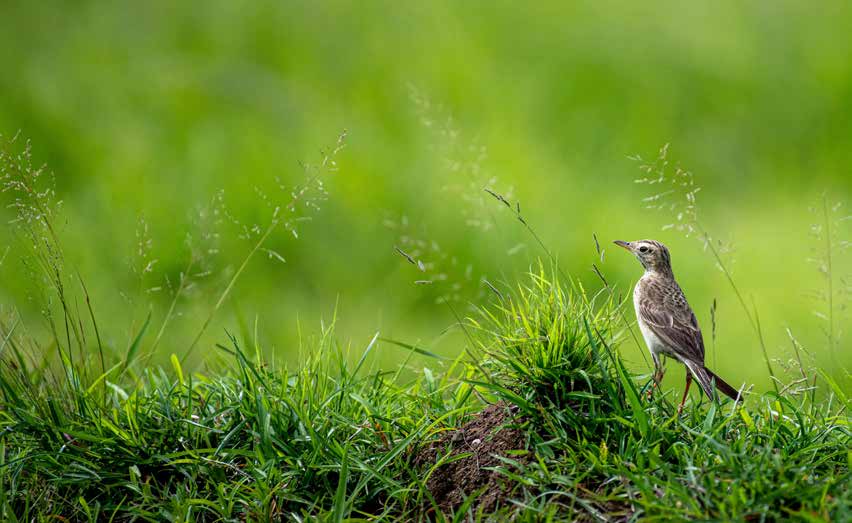
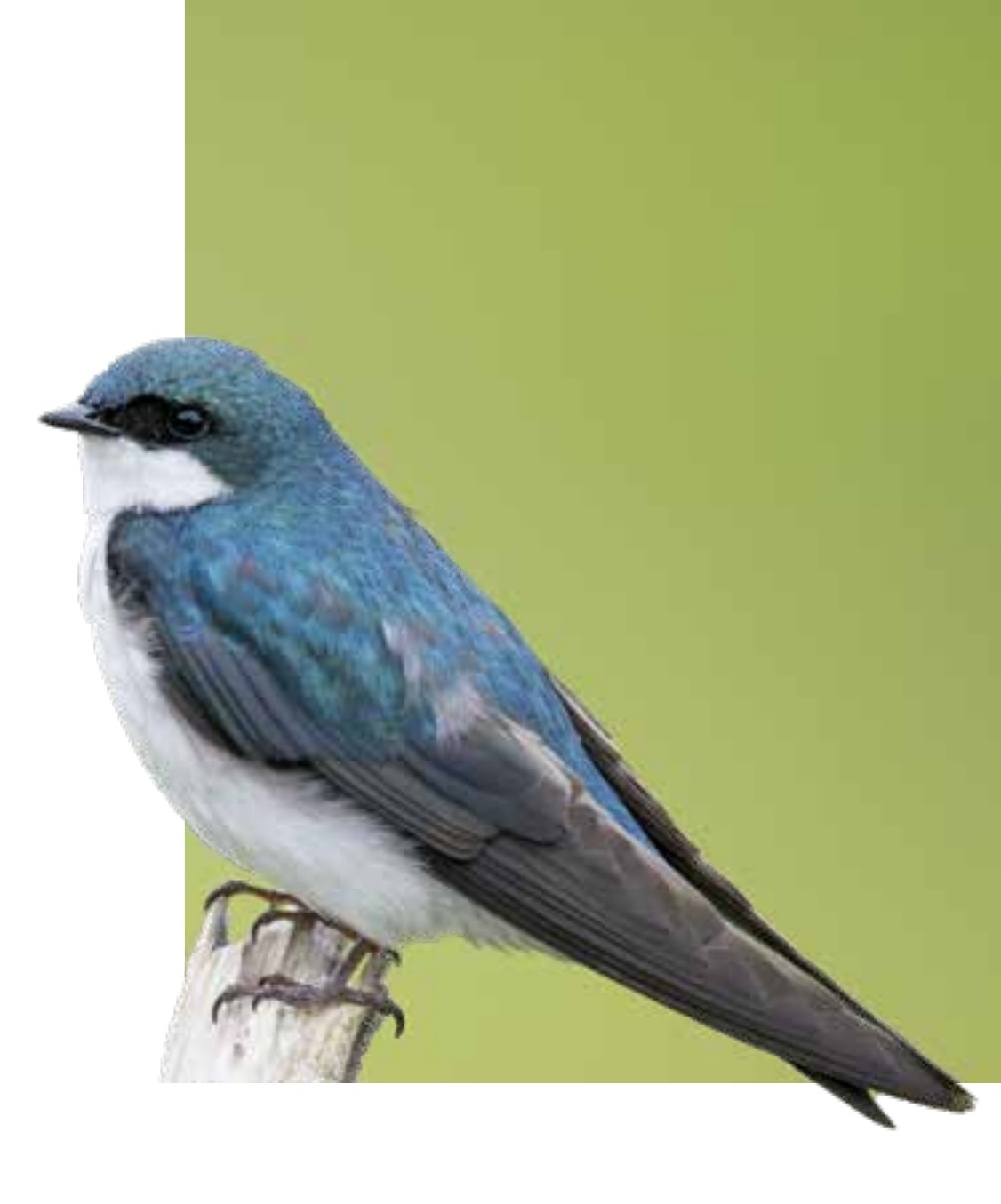
Birds are diverse. They exercise their joyous vocals so much that they are the epitome of happiness. The expression “happy as a lark” is so common a term that it is used by people who have never even ventured to the meadow to see or hear a lark. While some may inform us that these songs are mere mating calls and have little to do with their feelings, we cannot escape the inner conviction that, whether mating or not, these birds delight in bearing a jubilant expression of joy and we do well to let them teach us. “Is any merry? Let him sing psalms” (James 5:13). The birds do this incessantly and it seems impossible to draw any other conclusion but that they are happy while doing so. Wander near the nest of a swallow and you will find that they have ways of expressing depreciation as well. The killdeer also has no qualms with expressing rash disfavor to those who intrude their domain, but these are not to be mistaken as songs. The singing birds are a beautiful painted picture of the saints and angels of God.
How little knowledge of heaven is committed to our understanding. The scenes of heavens described and laid out before us in Revelations can hardly bring our finite minds into its infinite realm. One dimension that we can connect with is that it is a place filled with singing. Little wonder, for it is the culminating end of the contented and joy-filled saints of God, and there they will sing a new song. Nearly every scene at the throne in Revelations is marked by some dimension of praise. “And he hath put a new song in my mouth, even praise unto our God” (Ps 40:3). On 22 occasions, the Scriptures reiterate the phrase, I will sing.
It is the nature of the birds to sing. It is their waking thought as morning guilds the sky, and it flows from within them like a fountain. Not all of their songs are alike. Some are elaborate in their duration, meter, and pitch, while others are plain. Some merely chirp with a merry heart. The robin opens up the choir in early spring, but his song is soon surpassed in beauty by the song sparrow and again by the rose-breasted grosbeak. The song of the wren trumps them all for longevity and vibrancy. The canary sings in a cage, while the nightingale sings in the dark. The robins sing in the rain. The buntings fill in the heat of the day when other birds are silent. As diverse as their song may be, they all commonly burst forth in exuberant happiness. It is here that they shall instruct us.
“Speaking to yourselves in psalms and hymns and spiritual songs, singing and making melody in your heart to the Lord” (Eph 5:19). The advent of Christ was marked by the angelic host announcing peace and goodwill toward men. All those who will bear His name must deliver the same tidings. In John 4, we happen upon the scene at Jacob’s well, where Christ asks the woman for a drink. Her reply seems to bear a tinge of bitterness. “Jews have no dealings with the Samaritans.” Though she esteemed herself as a spiritual person and willingly followed Him into religious discourse, she had no song. Like the well that they speak over, her water was buried deep below the surface and how laborious the effort to bring it forth. Christ offers another alternative. “But the water that I shall give him shall be in him a well of water springing up into everlasting life” (John 4:14).
The well of Christ is an artesian well. One needs neither pitcher nor labor to draw it out, for it spews forth abundantly on its own accord. While Christ is probably speaking of the Spirit as in John 7:38, surely this may be just as applicable to a joy-laden heart. What is a more apt outpouring to flow from a Christ-inspired wellspring than the rapture of a song? “Behold, my servants shall sing for joy of heart” (Is 65:14). Now this should all seem plain enough to understand and easy enough to do but, alas, we find we have a constant and persistent adversary who seeks to thwart our song. We are not unaware of his devices...
Sin. Not all birds sing. There are some whose visage is black as sin. These only seem to screech and scream and are no example for the saints of God to emulate. The babbling noise we hear emanating from many passing vehicles certainly parallels the songs of such foul fowl. “Babylon the great is fallen, is fallen, and is become the habitation of devils, and the hold of every foul spirit, and a cage of every unclean and hateful bird” (Rev 18:2). These abundant creatures are the fallen spirits, the fowls waiting to devour the seed sown by the wayside. Of such are the worthless blackbirds, starlings, and grackles. The crows show themselves also at the roadside, feeding on rotting carcasses. Often you will find them in large numbers feeding themselves on the corn the farmer painstakingly planted for himself. So transgresses the selfish soul in his pursuit of happiness, feeding gleefully on the calamity of another and exploiting their sin. He bears no song, for his day is constantly clouded by the misdeeds of others who cross his path.
Neglect. The cowbird is also black (the female is brown/gray). She will be found sitting on a high vantage, shamelessly calling to her lovers by her shrill screeching. She then has the audacity to lay her egg in another bird’s nest, forcing them to raise her offspring. This is certainly a fitting emblem for a good number of females in our day. Though justified by circumstances, these women care not for their own, but are products of neglect. They have no lullaby to share with their young, for they have escorted them to the nest of another while her mind is preoccupied with work and business. “But thou art he that took me out of the womb: thou didst make me hope when I was upon my mother’s breasts” (Ps 22:9). No doubt that the singing mother can implant copious songs in her infant and set the stage for a happy and hope-filled life. While we may show mercy to a woman in dire circumstances, the major song of modern women bears chords that are but dissident and melancholy. These are stopped-up wells like unto the wells that Isaac found upon his return to Gerar. The Philistines “had filled them with earth” (Gen 26:15). So run the spiritually neglected homes of many families today, who pack their schedules so full of earthly commitments that they have no time to spend an hour in song together. If the birds stopped singing, would they even notice?
Ingratitude. Find a soul bathed in unthankfulness, and you will find a soul without a song. If the canary were to refuse to sing in captivity, few of us would ever have heard his rollicking melody. “We hanged our harps upon the willows in the midst thereof. For there they that carried us away captive required of us a song; and they that wasted us required of us mirth, saying, Sing us one of the songs of Zion. How shall we sing the LORD’S song in a strange land?” (Ps 137:2-4). God’s people had been instructed by Jeremiah to build houses, plant gardens, and raise families. “… And seek the peace of the city whither I have caused you to be carried away captives, and pray unto the LORD for it: for in the peace thereof shall ye have peace” (Jer. 29:5-7). But they could see no worth in it. With their eyes fixed upon the dismal scene around them, they lost their song. Israel had within its history a rich tradition of song. Their singing erupted at the passage of the Red Sea in the days of Jehoshaphat and had been known to defeat armies. Earthly discomfort is no excuse to withhold gratitude, for our God reigns, and we are His children. Such were the conditions of the Philippian prison where two jailbirds, Paul and Silas, opened the concert at midnight and rocked the corridors with their joyful singing.
When we open our mouths and stretch our vocals in praise, we enact the grace of God. We join the faithful choir alongside Miriam, Deborah, and Hannah, and blend harmoniously with Moses, David, Paul, and Barnabas. At evening, we sing with our Lord and His disciples after supper, and with legions of angels “giving glory to God in the highest.” If that isn’t enough, perhaps we should consider rising at early dawn and singing with the innumerable hosts of our feathered friends who are thankful for God’s loving providence. “Let the word of Christ dwell in you richly in all wisdom; teaching and admonishing one another in psalms and hymns and spiritual songs, singing with grace in your hearts to the Lord … And whatsoever ye do, do it heartily, as to the Lord, and not unto men” (Col 3:16, 23).