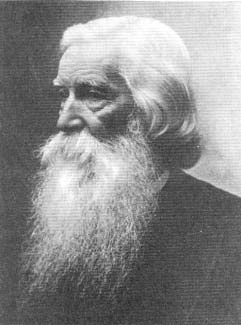
The Release of the Spirit is a deeply searching book written by the great Chinese author and preacher, Watchman Nee. The material in the book was first delivered in a series of messages in 1948 under the title “The Breaking of the Outward Man unto the Release of the Spirit.” The author uses the pattern suggested by 1 Thessalonians 5:23, “I pray God your whole spirit and soul and body be preserved blameless…” in his descriptions of man’s three-part being as spirit, soul and body.
First of all, when God comes to indwell us by His Spirit with His life and power, He comes into our spirit at the time when we were born again (John 3:6). This regenerated spirit located at the center of man’s being is what we call the inward man. Secondly, outside the sphere of this inward man indwelt by God is the soul. Its functions are our thoughts, emotions, and will. Thirdly, the outermost man is our physical body, characterized by its external instincts of sight, sound, smell, taste, and touch.
The author uses the story of the penitent woman who broke an alabaster box in order to release the perfume to show us God’s desire to break our outward man, the soul, in order to allow the release of the inner man, the spirit. Until the independence and proud self-sufficiency of the outward man are destroyed, we can do nothing of value for God. All of our best efforts will still be based in our own strength, willpower, or intellect. But with the breaking of that outward man, usually through trial and difficulty, comes a release of our spirit, united with and controlled by the Holy Spirit, and then God can truly work through us. Nee writes:
Strange to say, many are still treasuring the alabaster box, thinking that its value exceeds that of the ointment. Many think that their outward man is more precious than their inward man… One will treasure his cleverness, thinking he is quite important… Others highly regard themselves, because they feel they are better than others, their eloquence surpasses that of others, or their quickness of action and exactness of judgement are superior, and so forth. However, we are not “vase” admirers. We should be those who desire to smell only the fragrance of the ointment…The Holy Spirit…makes sure one event after another and one difficulty after another come to us. These disciplinary workings of the Holy Spirit have but one purpose- to break our outward man so that our inward man may come through. Yet here is our difficulty- we fret over trifles, we murmur at small losses, and we complain about insignificant things… Since the time when we were saved, we have been touched by the Lord many times in various ways- all with the purpose of breaking our outward man. Whether we are conscious of it or not, the aim of the Lord is to break this stubborn vessel called our outward man.
God apparently blessed the spiritual understanding of this godly man, for his writing has a way of gently but unrelentingly stripping away layer after layer of one’s self and its defenses until the naked truth is all that remains. In the light of that truth, we will see the subtle corruption of our outward man, as the author describes in the following lines.
Should God be so merciful so as to grant us even a small degree of revelation- seeing ourselves as we are seen by Him- we shall immediately be smitten to the ground. We need not try to be humble. Those who live in the light cannot be proud. Outside of God’s light, men can be arrogant and unapproachable. But under His revealing light, they will surely prostrate themselves before Him.
As you read this book and come to understand the deep desire of God to break your outward man, you will no longer see anything in your life as the result of mere chance. Every detail of our lives is planned or allowed by God for His perfect purpose of making us holy by breaking our outward man and bringing it under the complete control of the spirit. With this realization comes a deeper understanding and love for God as a loving Father Who cares about each of us personally and customizes the events of our lives according to our need. Nee describes this individualized, loving care.
God’s method in breaking our outward man varies according to the target. Let us explain the target in this way: with some people, the target is their self-love. With others, it’s their pride. Still others need their self-reliance and their cleverness to be targeted. The latter will find themselves in one predicament after another, defeated at every turn, until they, at long last, will learn to say, “We will no longer live in fleshly wisdom, but in God’s grace.”
Another chapter deals with the church and God’s work, and how these principles apply to that subject, while others explain how to know man, brokenness and discipline, and meekness in brokenness. The author shows how futile it is for us to imitate fruit by the strength of the outward man, rather than allowing a spontaneous work of the spirit. He takes the subject of brokenness, which often carries a negative connotation, and presents it as a vital and beautiful aspect of Christ-likeness that we desire at any cost. This is not a book that you will want to read quickly. In fact, you may often find yourself laying it aside after only a page or two in order to get alone with God. As you read, you will gain a new appreciation for the beauty of brokenness, and will desire it even at the expense of some “light affliction, which is but for a moment.” If you can get this book, I urge you to read it and allow God to begin or continue the work of breaking you for The Release of the Spirit to His glory.